A marble dining table brings cool veining and a smooth, luminous surface to everyday meals. It also needs thoughtful care. Marble can absorb some liquids, and acidic foods may dull its finish. Knowing How to maintain a marble dining table top begins with small habits: use coasters beneath glasses, place serving dishes on mats, and keep a soft cloth nearby. Blot spills promptly. Don’t rub them across the stone.
Stone-restoration expert Fred Hueston’s work offers a practical reminder: marble should be treated as a natural, acid-sensitive stone, not as an indestructible surface. This is a summary of that care principle, not a verbatim quotation. For routine cleaning, use a damp microfiber cloth and a cleaner labeled safe for natural stone. Avoid vinegar, lemon-based solutions, abrasive powders, and rough scrub pads. They can etch or scratch the finish. Sealing may help reduce absorption, but it cannot make marble stain-proof; follow the table maker’s guidance on whether and when to reseal. Even careful owners miss a spill sometimes. If a mark remains after gentle cleaning, pause before trying a stronger product. A stone-care professional can help identify whether it is a stain, an etch, or surface wear. The right response depends on the mark. These simple checks keep maintenance realistic, protect the table’s finish, and help preserve its natural character over years of meals.
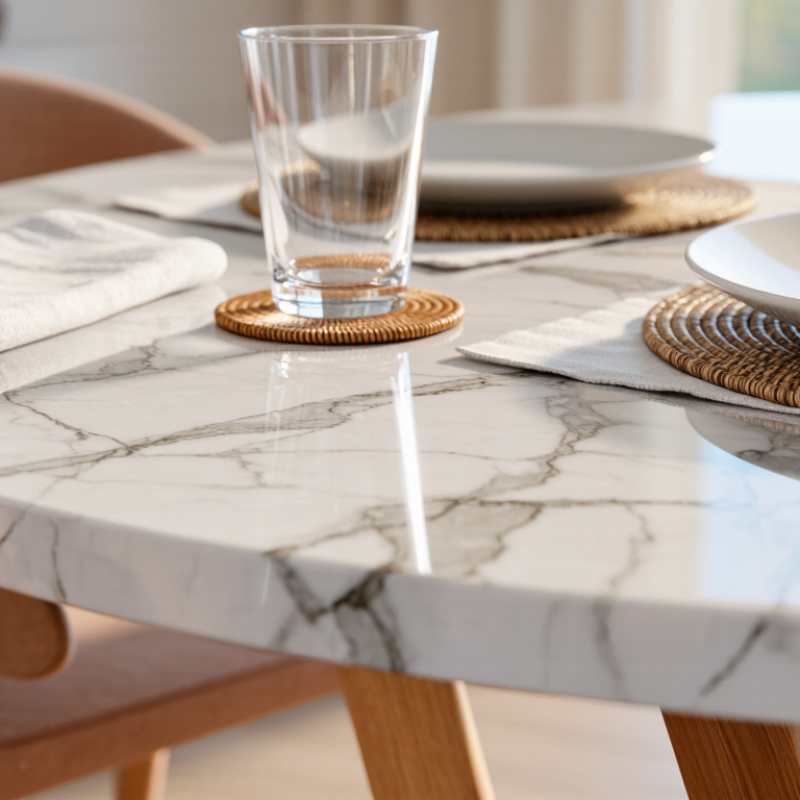
Marble is a natural stone made largely of calcite, so its surface responds differently from wood or laminate. It can feel cool and smooth, but tiny pores may absorb oil, wine, or coffee. Acid leaves marks. Lemon juice and vinegar can dull the finish through etching, which is a chemical change, not simply a stain. Polished marble shows a glossy reflection; honed marble has a softer, matte look and may display marks differently.
For everyday care, wipe crumbs with a soft, dry cloth, then use a damp microfiber cloth and a pH-neutral stone cleaner. Marble is porous. Blot spills promptly instead of scrubbing them across the surface; red wine left around a glass base can leave a stubborn shadow. Use coasters under drinks and trivets beneath hot cookware. Avoid abrasive powders, rough scouring pads, and acidic household cleaners, which can scratch or dull the stone. A sealant can slow absorption, but it does not make marble stain-proof.
Sealing needs vary with the stone, finish, and amount of use. Follow the installer’s guidance, and test any cleaner or sealant on an inconspicuous spot first. Even careful owners miss a spill now and then; that is normal. If a pale, rough-looking patch remains after cleaning, it may be etching rather than dirt, and repeated polishing at home can make the finish uneven.
| Care Topic | What to Know About Marble | Recommended Care | Avoid |
|---|---|---|---|
| Porosity | Marble is a natural, calcium-carbonate stone. Its surface can absorb some liquids, especially if unsealed or if the seal has worn. | Wipe spills promptly and ask a stone-care professional whether sealing is suitable for the specific finish and use. | Leaving wine, oil, coffee, or other spills on the surface for an extended time. |
| Acid Sensitivity | Acids can react with calcite in marble and dull or etch the polished surface. Etching is surface damage, not simply a stain. | Use coasters for citrus drinks and place mats beneath acidic foods; clean accidental splashes promptly with water and a soft cloth. | Vinegar, lemon juice, wine, and acidic or abrasive household cleaners. |
| Daily Cleaning | Grit and food residue can scratch the finish when rubbed across the tabletop. | Dust with a clean, soft cloth. For routine cleaning, use warm water or a pH-neutral cleaner labeled safe for natural stone, then dry with a soft cloth. | Scouring powders, rough pads, and cleaners containing acids or strong alkalis. |
| Heat Protection | Marble is stone, but sudden temperature changes and direct contact with hot cookware may damage the surface or finish. | Use trivets or heat-resistant pads under hot dishes and cookware. | Placing hot pans directly on the tabletop or exposing one area to sudden temperature changes. |
| Scratch Prevention | Marble can scratch, and trapped grit may abrade its polished finish. | Use placemats or a tablecloth for meals, and lift decorative objects rather than sliding them. | Cutting directly on the stone or dragging ceramic, metal, or gritty items across it. |
| Spill Response | Some liquids can leave stains if absorbed; acidic liquids may etch even when wiped quickly. | Blot spills with a soft cloth rather than spreading them. Clean the area with stone-safe cleaner and dry it. | Scrubbing aggressively or using a generic stain remover without checking its suitability for marble. |
| Sealing and Restoration | A sealer can reduce liquid absorption, but it does not make marble stain-proof, scratch-proof, or acid-proof. Etching may require professional refinishing. | Follow the stone-care professional’s guidance for the stone type and finish; seek expert advice for persistent stains, etching, or chips. | Assuming sealing prevents all damage or applying a coating without confirming it is appropriate for the surface. |
Care needs vary with the marble, finish, and sealer. When in doubt, test a cleaner on an inconspicuous area or consult a qualified stone-care professional.
Remove crumbs with a soft, dry cloth. Wipe with warm water and a pH-neutral stone cleaner.
Blot the spill promptly instead of rubbing it outward. Rinse with clean water, then dry the spot.
Yes. Their acids can etch calcite and leave dull patches. It is a chemical change, not just a stain.
Put coasters under glasses, placemats beneath dishes, and trivets under hot cookware. Small habits help.
No. Sealer can slow absorption, but wine or coffee may still leave marks.
It depends on the stone, finish, and use. Follow the installer’s guidance and test products on a hidden spot.
It may be etching rather than dirt. Avoid repeated home polishing, which can make the finish uneven.
No. Water absorption varies by stone type. Ask for the slab’s technical test results; a generic figure can mislead.
Ask a stone-care professional whether resealing is appropriate. I still miss stray drops sometimes. A quick look helps.
How to maintain a marble dining table top begins with understanding that marble is a natural, porous stone that can be sensitive to acidic substances and abrasive cleaning. Use a soft microfiber cloth, warm water, and a pH-neutral cleaner suitable for stone. Wipe the surface gently, then dry it with a clean cloth to help prevent water marks. Clean up spills promptly, especially those from wine, coffee, citrus, or oil, by blotting rather than rubbing.
For stains or dull etch marks, choose a treatment appropriate to the type of damage and avoid harsh chemicals, scouring pads, or improvised abrasive methods. Protect the tabletop with coasters, placemats, and trivets, and avoid dragging heavy or rough objects across it. Regular gentle cleaning and periodic care suited to the stone’s finish can help preserve its appearance and provide lasting protection.

 Nichols furniture